Skip to content
  • Free delivery* and returns
  • Packed with care, delivered within 1-3 working days
  • 30 days consideration period
  1. Home
  2. Blog

Our blog

On this blog page you can read inspiring and recognizable stories of moms and dads (to be) and experts about their special profession. In addition, you can read the fun blogs about our newest items, checklist and tips.

From Baby to Toddler: 4 Key Developmental Areas Explained

From Baby to Toddler: 4 Key Developmental Areas Explained

The first years of a child’s life bring tremendous growth in every area — from a helpless newborn to an inquisitive toddler exploring the world. This period lays the foundation for the future. In this blog, educational psychologist and author Loes Waanders walks you through four essential developmental areas for children aged 0 to 4: physical, cognitive, social-emotional, and speech and language development. Observe Your Own Child Before diving in, remember: every child develops at their own pace. The internet is full of well-meaning advice, which can sometimes be helpful, but also overwhelming. If your child isn’t walking “on time,” it might make you feel anxious. Know that your child follows their own unique path. What your child needs most is a calm, confident parent — not one pushing them to meet arbitrary milestones. Let this blog be an inspiration, not a checklist. 1. Physical Development At birth, a baby is completely dependent on you. In the early months, they begin discovering their body — lifting their head, rolling over, sitting, crawling, and walking by the end of the first year. Fine motor skills begin to develop too, like transferring toys from one hand to the other. Toddlers love to paint or play with cars, and by age 3, many can unbutton clothing or draw with a pencil. 2. Cognitive Development This includes how your child processes and remembers information. A newborn mostly reacts instinctively — crying when hungry or uncomfortable. Over time, they learn through repetition: when mom says, “Your bottle is coming,” they associate her voice with feeding. Around 6 to 8 months, they begin to understand how their behavior impacts others. A toddler learns through experimentation — like noticing that a toy car goes faster on a smooth floor. Children also imitate others. Around 18 months, they begin solving small problems independently. Between 2 and 4 years, fantasy play (like playing house) becomes common, blending reality and imagination. This can lead to nightmares or fears. Avoid using fear-based discipline (“The monster will get you”), and instead, support your child by acknowledging their feelings and imagination. 3. Social and Emotional Development Early on, children learn how to connect with others and manage feelings. Babies experience basic emotions — happy, sad, angry, scared — but can’t express them yet. That’s why caregivers play a vital role in soothing and naming emotions, even from day one. Babies may not understand your words, but they feel your tone and presence. Toddlers are naturally self-focused. Before age 3, they often play next to others, not with them. By 3 to 4, they begin to wait their turn and understand others’ emotions — “Mommy is crying, so she’s sad.” This is the beginning of emotional understanding, which differs from empathy (putting oneself in another’s shoes), which continues to develop until age 9 or 10. Narrating social situations helps children make sense of them — “Mats wanted the doll too, so he grabbed it.” 4. Speech and Language Development Even before they talk, babies communicate — through crying or gestures. Parents naturally respond with soothing and speech. Though babies may not understand your words at first, they feel your reassurance. Around 7-8 months, babbling begins, and by 12 to 18 months, the first real words appear. Language comprehension usually develops faster than speech. A toddler may understand “Give me the ball” even before they can speak. That’s why it’s important to be mindful of what you say around your child — they pick up tone and meaning quickly. Between 18 months and 2 years, toddlers often say their name and use two-word phrases. Between 2 and 3 years, these grow into longer sentences. By 3 to 4, children ask lots of “why” questions and begin answering simple ones. Final Thoughts This is just a snapshot of the many areas in which your child grows. Most importantly, keep tuning into your child’s unique pace. Some kids make big leaps in speech while others focus on motor skills — and that’s perfectly okay. Each child distributes their energy differently across these areas. Loes Waanders is a child psychologist helping parents find more peace and joy in parenting, work-life balance, and self-care. She runs the largest online academy for parenting, kids & careers, and is the founder of the Parent First method. She’s also a speaker and author of the book De ontspannen ouder (The Relaxed Parent). www.loeswaanders.com
The Perfect Crib Setup with Jollein: Everything for a Good Night’s Sleep for Your Baby

The Perfect Crib Setup with Jollein: Everything for a Good Night’s Sleep for Your Baby

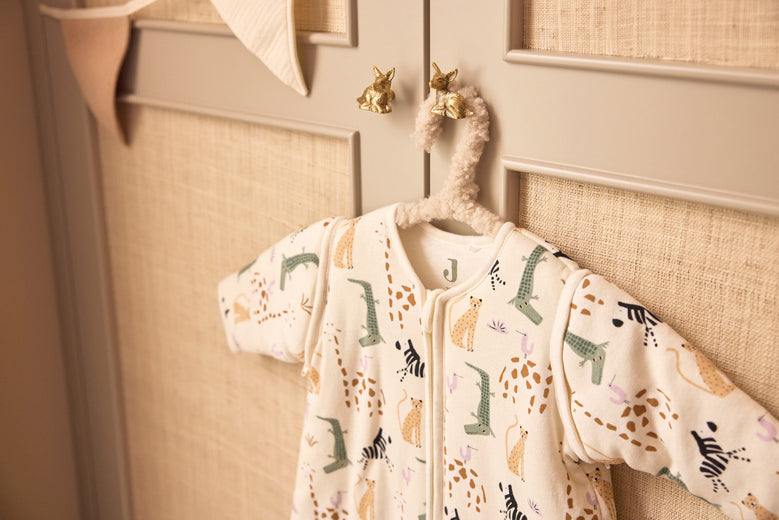
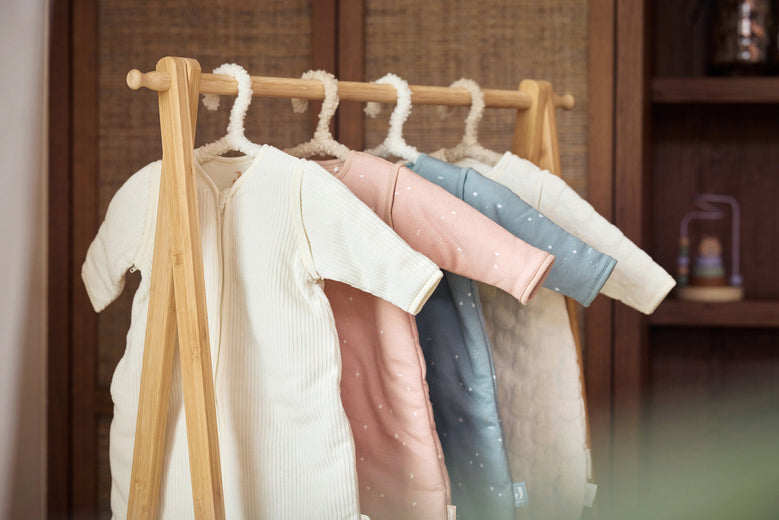
How to Style and Set Up Your Baby's Crib Setting up your baby's crib is one of the most exciting tasks when preparing the nursery. With the right essentials, you can create a safe and cozy sleep space for your little one. From soft sleeping bags to practical muslin cloths—Jollein has everything you need. Read on to find out how to make your baby’s bed both beautiful and safe! How to Make the Crib Safe and Comfortable A good night’s sleep starts with a well-made crib. Follow these simple steps to ensure your baby sleeps safely and soundly: 1. Use a Properly Fitting Mattress Make sure the mattress is firm and fits snugly inside the crib, with no gaps around the edges. This helps prevent your baby from getting stuck. 2. Add a Fitted Sheet Choose a breathable and soft fitted sheet that wraps tightly around the mattress. Jollein offers a wide range of fitted sheets that perfectly match your nursery style—and your baby’s sleeping bags too! 3. Choose a Sleeping Bag To reduce the risk of suffocation, it's safer to let your baby sleep in a sleeping bag instead of using loose blankets. Pick the right TOG rating depending on the season: Summer sleeping bag (TOG 0.5) for warm nights 4-season sleeping bag (TOG 1.0 – 3.5) for year-round use Sleeping bag with detachable sleeves (TOG 2.5 – 3.5) for the colder months 4. Optional: Add a Light Blanket and Sheet If you prefer to use a blanket and sheet, make sure they’re tucked in tightly under the mattress. Jollein’s soft blankets with a TOG value of 2 are perfect for cooler nights, offering just the right amount of warmth. 5. Avoid Overheating Always keep an eye on the temperature in the nursery. Use breathable materials and aim for a room temperature between 16–20°C (60–68°F). 6. Keep the Crib Clear Remove all loose items like toys, pillows, or crib bumpers. A clutter-free crib is the safest choice. Mix and Match Your Favorite Themes Of course, safety is key—but you also want your baby’s crib to look beautiful. Jollein’s sleep essentials combine function with style. Our dreamy prints, soft colors, and gentle textures let you create a look that’s both calming and trendy. Combine pastel tones and soft materials for a crib that’s just as cute as it is comfortable. Muslin Cloths for Extra Convenience Muslin cloths are a must-have in every nursery. Use them as an extra protective layer on the mattress or during those little spills and accidents. Soft, absorbent, and quick to wash—Jollein’s muslin cloths are practical lifesavers for every parent. With these tips, you’ll create a sleeping space that’s safe, cozy, and totally ready to welcome your baby. Discover the full collection and get inspired to style your dream nursery! Shop Crib Essentials
Everything you need to know about the TOG-value

Everything you need to know about the TOG-value

Is your baby too hot or too cold? That can sometimes be hard to tell. It’s true that newborns aren’t yet great at regulating their own body temperature. That’s why it’s good to know: being a little too cold is actually better than being too warm! Luckily, there are some helpful guidelines for how to tuck your little one in, so they’re not too hot or too chilly. In this blog, we’ll tell you all about it.Common sense goes a long wayYou know how uncomfortable it feels to be too warm in bed — you start to sweat, feel stuffy, and end up kicking off the covers. But your baby can’t do that yet. That’s why it’s important to check on your little one now and then. Is their head too warm? Are their feet or neck too cold? Is your baby clammy or sweaty? Especially when they’re under the weather, they need to be able to release excess heat. You probably have a pretty good sense of the temperature in the room. And remember: it’s better to be slightly underdressed than overdressed!Keep it coolResearch shows that babies can struggle to breathe properly in an overly warm and crowded crib. A baby could roll onto their stomach and end up with their face pressed against a pillow or blanket, limiting access to fresh air. If your baby is wrapped up too warmly, their body temperature can rise to an unsafe level — especially if the bedroom is also being heated. 18 degrees Celsius is warm enough!Paying attention to TOG Trusting your instincts and doing regular checks is the best way to help your baby sleep safely. But there’s also a technical aid: the TOG value. This is a rating system for how well bedding and sleepwear insulate. The colder the room, the higher the TOG value can be. Conversely, the warmer the room, the lower the TOG value should be. TOG stands for Thermal Overall Grade, and the number tells you how much warmth is retained by items like sleeping bags, blankets, swaddles, and clothing. TOG ratings range from 0 to 4 and are meant to be used indoors at room temperature. They are not suitable for outdoor use.A guideline for temperature controlHere’s a handy overview of TOG values and the corresponding room temperatures. Important: Don’t add TOG values together. That’s because of the insulating air layer that forms between two separate layers — this layer adds extra warmth on its own. So trust your gut and use common sense when dressing your baby for sleep.
5 Baby Sleep Myths Debunked by a Sleep Coach

5 Baby Sleep Myths Debunked by a Sleep Coach

If you’ve recently had a baby, you’ve probably searched the internet for ways to help your little one sleep better. There’s so much information out there, it’s easy to feel overwhelmed. That’s why Patricia, certified sleep coach at Bureau van Slaap, is here to clarify things. She shares 5 common baby sleep myths and what parents should actually focus on. 1. Your baby needs to sleep according to a strict schedule Online and in parenting books, you’ll find plenty of daily sleep schedules: a short morning nap, a long midday nap, possibly a late afternoon nap, and bedtime at 7 PM. While that sounds ideal (because it gives you predictability), most babies don’t follow such neat patterns. Some days the morning nap is short, other days it’s the longest. Some babies only take short naps all day. That’s why at Bureau van Slaap, we work with wake windows instead of fixed schedules. A wake window is the amount of time a baby can stay awake between naps. These windows vary by age and adjust as your baby grows. Putting your baby down at the end of their wake window makes it easier for them to fall asleep and rest longer. 👉 Want to learn more about wake windows? Download our free Wake Window Guide (Dutch only) full of tips and real-life examples. . 2. Your baby should nap in the light during the day You’ve probably heard that your baby should nap in daylight during the day and only sleep in the dark at night — to help them learn the difference between day and night. This advice only applies to the first 6 to 8 weeks, while your baby is still developing a circadian rhythm. After that, it’s perfectly fine (and often helpful!) to let your baby nap in a dark room. Light signals the brain that it’s daytime and time to wake up. So for longer, more restful naps, darken the room from about 8 weeks onwards. 3. Babies shouldn’t sleep too much during the day People often say: “Your baby wakes up at night? Let them nap less during the day!” Unfortunately, the opposite is true. A baby who doesn’t get enough daytime sleep can quickly become overtired — and overtired babies actually sleep worse at night. Good daytime sleep supports better nighttime sleep. And don’t worry, most babies won’t sleep too much. Instead of counting hours, observe your baby: are they waking up happy, growing well, and hitting milestones? Then they’re likely getting the sleep they need. 💡 Pro tip: Try not to let a single nap last longer than 2.5–3 hours — save the long stretches for nighttime. 4. A later bedtime means your baby will wake up later Many parents with early risers (babies waking before 6 AM) are told to try a later bedtime. But keeping your baby awake too long in the evening leads to overtiredness, which actually increases the chance of early wake-ups. Sometimes, a later bedtime can help, but only if your baby has an extra late nap to support staying up longer. Otherwise, a later bedtime without added rest can backfire. And remember: early waking can have many causes — like hunger or a room that’s too bright. At Bureau van Slaap, we’re happy to help you figure it out. 5. Babies sleep better in their own room In the early months, most babies sleep in their parents’ room. It makes night feeds easier and supports bonding. Later on, some claim babies sleep better in their own room. But honestly? It depends on your child. If co-sleeping works for you and everyone’s sleeping well, there’s no need to change it. Around 6 months, many parents notice they start waking each other more easily. If that’s happening, it might be time to transition to separate rooms. But if you’re all sleeping well together — no need to rush it Need help with your baby's sleep? Send us an email — we’re always happy to think along with you! Patricia and her team at Bureau van Slaap support families with gentle, loving sleep coaching. That means no cry-it-out methods or rigid routines. Want more sleep tips?Follow Bureau van Slaap on Instagram or visit their website. You can also request their free sleep tips guide for more peace and rest in your home.
Which Blanket Do I Need for My Baby?

Which Blanket Do I Need for My Baby?

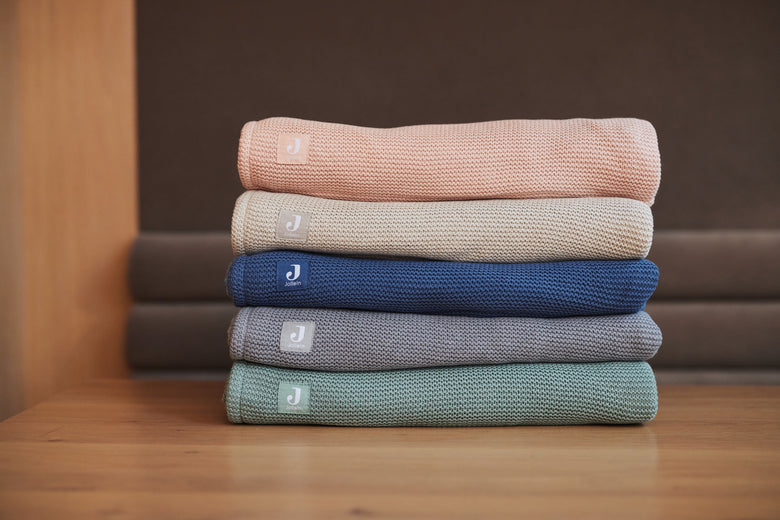
We’ve noticed that many expecting parents feel uncertain and confused about which blanket is best for their baby. And that’s completely understandable — there are so many options out there! So, what blanket do you actually need for your little one? And how do you, as a soon-to-be parent, make the best choice? When you're shopping for your baby essentials, you’ll eventually start thinking about the blanket your little one will sleep under. It should be warm and, of course, match the style of the nursery. Blankets come in a variety of materials, sizes, and colors — and you can also take the blanket’s TOG rating into consideration. → View all cozy baby blankets here What Is TOG? The TOG value is a helpful technical guide to ensure your baby sleeps safely. It’s a rating system that indicates the insulating properties of sleep textiles. The lower the room temperature, the higher the TOG value can be. TOG stands for Thermal Overall Grade and tells you how well body heat is retained in items like sleeping bags and blankets.→ Read everything about TOG ratings in our blog Consider the Room Temperature When buying a blanket for your baby, it’s important to consider the season in which your baby is due. If you're expecting a baby in autumn or winter, go for a blanket with a teddy or fleece lining. It’s soft and warm. But if you're expecting a summer baby, that same lining might be too warm — in that case, a lightweight, unlined blanket is a better choice. It’s always good to follow your own instincts when choosing a blanket. Some babies get cold easily, while others get warm quickly. Also, the weight of a blanket doesn’t determine how warm it is. Synthetic blankets are much lighter than cotton ones, but they’re not necessarily less warm. Cotton, Wool, or Synthetic? Research by VeiligheidNL in collaboration with TNO-textile shows that the type of material your baby sleeps under doesn't matter as much as making sure the bed is made up tightly and safely. Over the years, synthetic materials have improved significantly — they’re no longer sweaty or non-breathable. In fact, a cotton blanket with a synthetic lining can be warmer for cold days than a single cotton layer. Cotton absorbs moisture, which can leave a damp spot — so if your baby sweats a lot, this may not be ideal. Synthetic fabrics don’t absorb moisture but wick it away. So ultimately, the choice between cotton, synthetic, or a blend comes down to personal preference. Your Perfect Blanket To find the perfect blanket, there are a few things to keep in mind. When you're still pregnant, you don’t know your baby yet — so it’s hard to say whether they’ll run hot or cold. But one thing you do know is that summer room temperatures are much higher than in winter. That’s something you can base your decision on. So, choosing the perfect blanket means keeping the season your baby is due in mind. Option 1: Due in autumn or winter (October–March) Choose a (knitted) blanket with a teddy or fleece lining. These typically have a TOG rating of 2.0, making them suitable for room temperatures between 20–22°C (68–72°F). You can pair this blanket with a diaper and a bodysuit/sheet. If the room is even cooler, you might add both a bodysuit and a sheet. Always follow your instincts and observe your baby — each one is different, so adapt accordingly. Option 2: Due in spring or summer (April–September) In spring and summer, room temperatures are higher, so opt for a lighter blanket. Choose a (knitted) blanket without lining. These have a TOG rating between 0.9 and 1.3 — ideal for room temperatures around 23–24°C (73–75°F). Pair with a bodysuit and sheet. You can also choose a muslin (hydrophilic) blanket, which has a TOG rating of 1.3. Made from soft cotton, it absorbs moisture well. Again, follow your instincts and observe your baby. What Size Blanket Do I Need? Aside from materials, patterns, and colors, baby blankets also come in different sizes. Generally, there are two standard blanket sizes: 75×100 cm – for a bassinet or Moses basket 100×150 cm – for a crib or cot If your baby’s bed has different dimensions, be sure to double-check sizing when purchasing a blanket. So when shopping for the right blanket, it’s important to consider your baby, the room temperature, and — most importantly — trust your instincts and use common sense
Tips for a Perfectly Organized Diaper Bag

Tips for a Perfectly Organized Diaper Bag

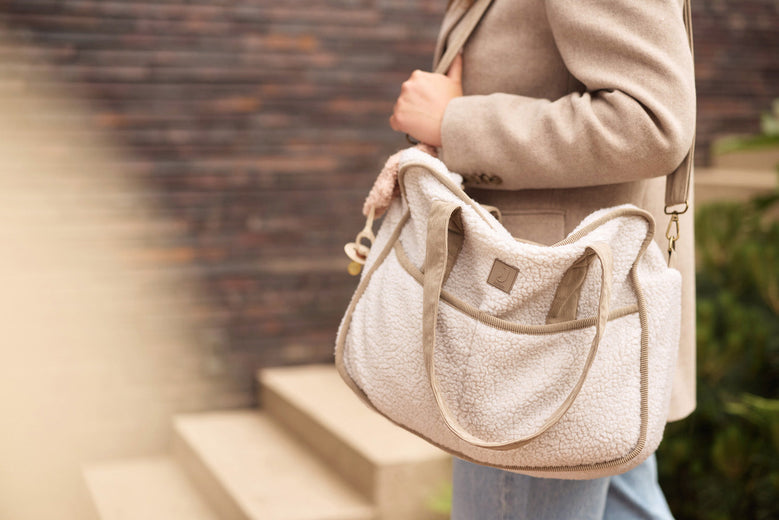
There’s nothing better than heading out the door with peace of mind, knowing you’ve packed everything your little one might need. But what exactly should go in your diaper bag, and how do you keep it neat and organized? Below, we’re sharing our best tips and must-haves for a well-organized diaper bag — including some clever Jollein products you won’t want to leave home without. What should always be in your diaper bag? Luiers en billendoekjesLet’s be honest — diapers are non-negotiable! Always pack a few extras, just in case. And don’t forget the wipes — not only for diaper changes, but also for unexpected messes. Tip: Store your wipes in a Jollein wipes case that keeps them fresh and makes them easy to grab. It’s stylish, durable, and a total game changer for your bag! Changing matA soft, compact changing mat is a must. It lets you create a clean surface for a quick diaper change anytime, anywhere. Extra outfitSpit-ups, blowouts… anything can happen. Always pack an extra bodysuit, pants, and shirt.Pro tip: Roll up the clothes to save space and keep things tidy! Bottles, snacks & pacifiersA happy baby = a happy outing! Don’t leave home without bottles, snacks, or baby food. And sometimes, a pacifier can be the ultimate lifesaver. Pacifier tip: Clip a Jollein pacifier holder to the outside of your bag. That way, it’s always within reach — and no more digging through the bag! Muslin cloths & bibsMuslin cloths are miracle workers! Use them as burp cloths, sunshades, or even light blankets. Don’t forget a bib — spills and messes are part of the fun. Toiletries in a compact pouchKeep essentials like hand gel, ointment, or mini sunscreen in a small pouch. That way, you don’t have to rummage through your bag to find them.Jollein offers great pouches — perfect for toiletries or those random little items that otherwise get lost. Toys for on-the-goA small toy or book can be a great distraction while you’re out and about. Just make sure it’s lightweight and compact so it doesn’t take up too much room. How to keep your diaper bag organized It’s easy for a diaper bag to become a chaotic mess — especially when you need something right now. These tips will help keep your bag tidy and functional: Make smart use of compartments Diaper bags often have multiple pockets. Assign each one a category: diapers, feeding, clothing, etc. This way, you’ll always know where to find what you need. Organize with pouches Group small items into separate pouches: one for toiletries, one for wipes, another for random extras. This keeps everything neat and easy to access. Roll the clothes Rolling clothes saves space and helps keep your bag tidy. You can even roll an outfit (bodysuit + pants) together for a grab-and-go clean change. Keep essentials within reach Clip a pacifier holder or other frequently used items to the outside of your bag. It saves you time — and stress — when you need something fast. Do a weekly check Once a week, take a moment to check your bag. Restock what’s running low and remove anything you no longer need. That way, you’re always prepared. An organized diaper bag = more peace of mind With a well-organized diaper bag, you can head out relaxed and fully prepared. At Jollein, we’ve got all the clever items to help keep your bag in order — from handy wipes cases to stylish pouches and pacifier holders that clip right to your bag. Whether you're planning a day trip, a sleepover, or just popping into town — a well-prepped diaper bag means you’re ready for anything, and can focus on enjoying those sweet moments with your little one. Happy organizing!